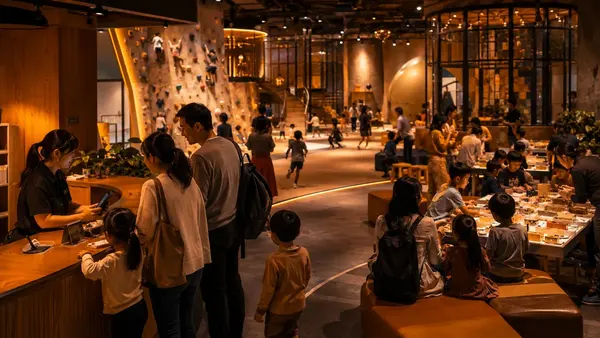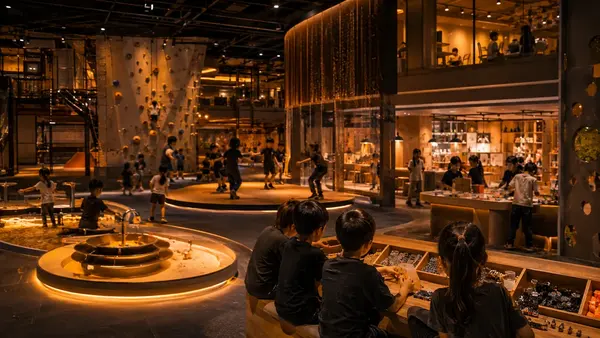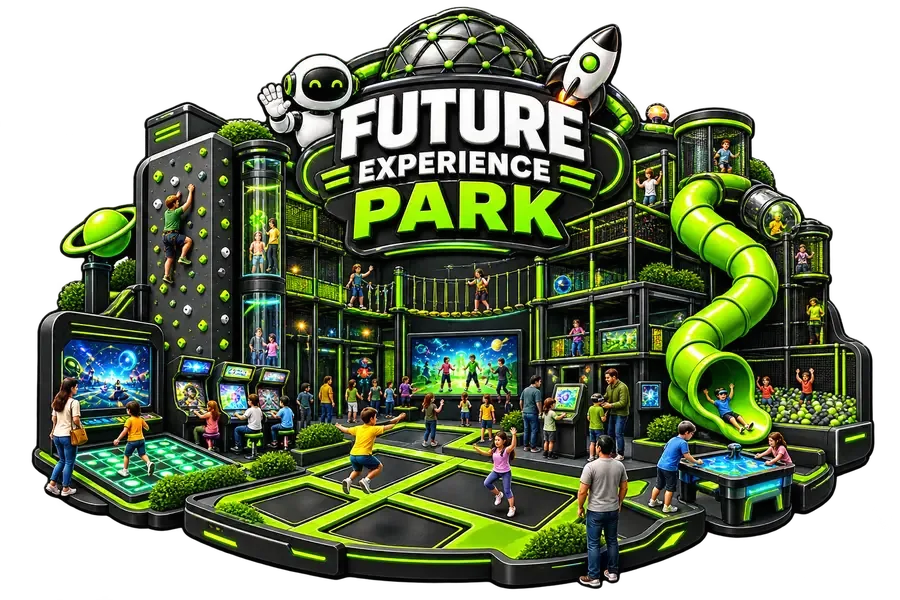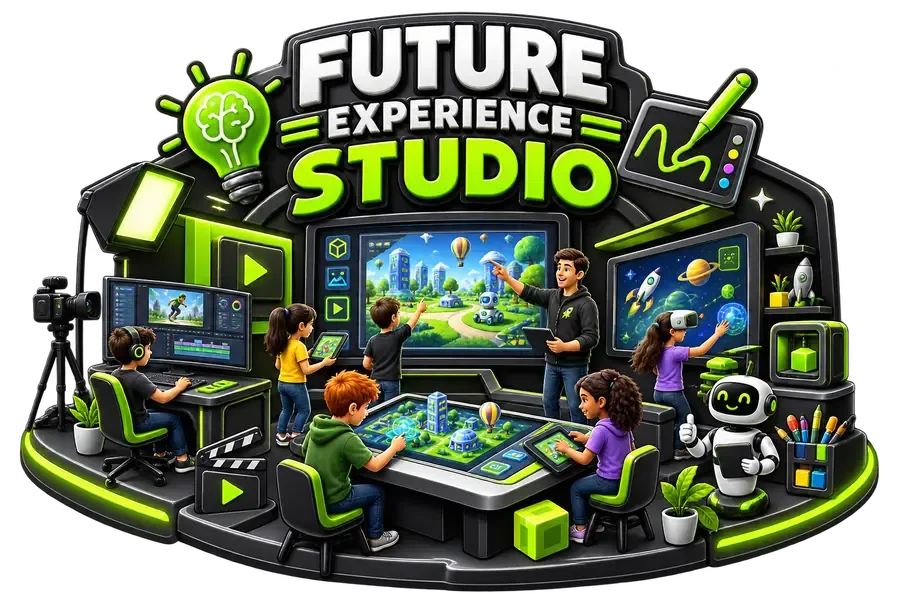
Artificial intelligence is rapidly changing the way children create, communicate, search for information, play games, and interact with digital media. That makes AI an important part of the future of family entertainment — but it does not make physical play less important. In many ways, it makes active, embodied experiences more valuable.
Children still need places where they can climb, balance, jump, crawl, throw, run, build, navigate, react, cooperate, and test what their bodies can do. Those experiences cannot be fully replicated by a screen, no matter how intelligent the software becomes.
Physical Play Is More Than Burning Energy
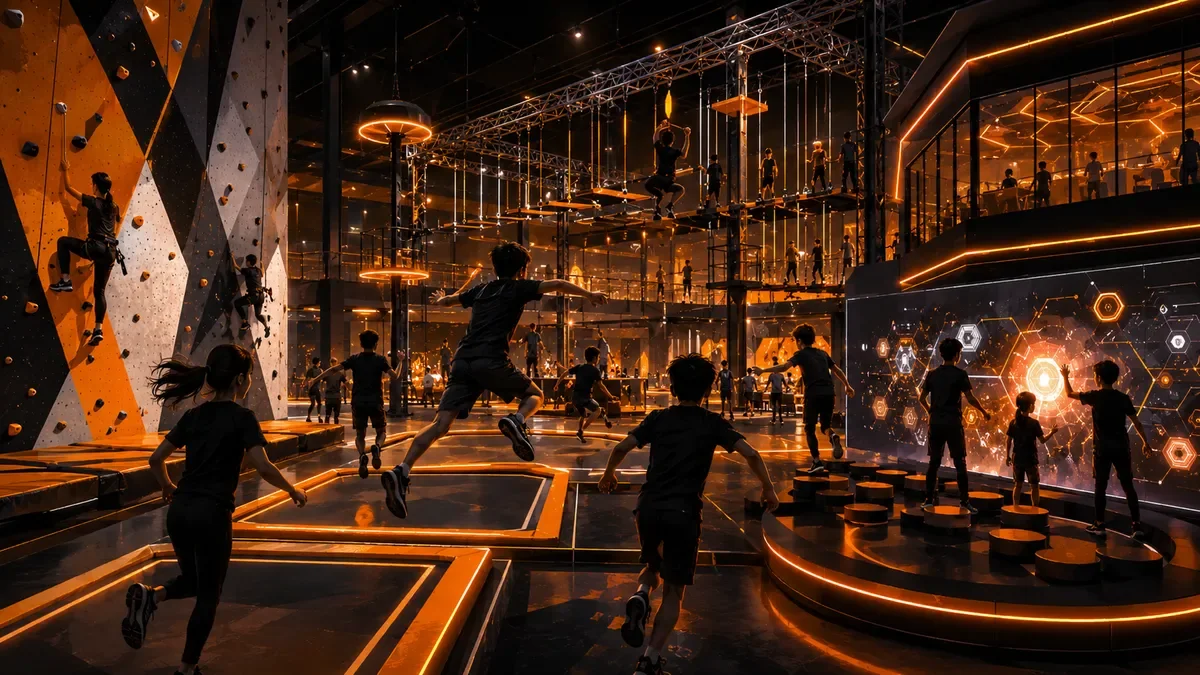
It is easy to describe active attractions in terms of exercise alone. A ropes course, climbing wall, obstacle route, trampoline zone, or team game certainly increases movement, but the experience also involves attention, judgment, confidence, planning, spatial awareness, coordination, and adaptation.
A child approaching an elevated obstacle has to read the environment, choose a route, manage uncertainty, adjust balance, and decide whether to continue. A climbing wall requires route selection and problem-solving. A team arena adds communication, timing, and social coordination. Even open-ended movement areas can encourage experimentation and self-directed challenge.
The strongest physical environments therefore engage body and mind together.
AI Should Add Depth to Movement, Not Replace It
The risk in adopting new technology is to confuse novelty with progress. Filling a family venue with more screens can make it look technologically advanced while reducing the amount of meaningful physical participation.
A stronger model uses technology to deepen activity. Interactive walls can respond to movement. Projected games can require running, throwing, or teamwork. A climbing route can contain changing missions. A physical challenge can adjust difficulty based on previous performance. A wristband can record achievements across visits. AI can help generate new missions, explain a challenge, personalize a sequence, or suggest what to try next.
In this model, the child remains physically engaged while technology makes the activity more adaptive, replayable, and connected.
Physical Experiences Have a Powerful Competitive Advantage
Families already have access to enormous amounts of digital entertainment at home: streaming, games, social media, tablets, phones, generative AI, online learning, and increasingly sophisticated interactive experiences.
A physical family destination should therefore avoid competing with the home on terms the home can easily win. A large-scale climbing structure, ropes course, vertical maze, sports arena, shared physical challenge, social event, and group experience provide something fundamentally harder to reproduce in a bedroom or living room.
This is a strategic advantage for FECs. The more digital entertainment improves at home, the more valuable place-based experiences that require movement, space, equipment, other people, and physical presence can become.
Active Play Can Support Cognitive and Social Development
Physical activity and cognitive activity do not need to be separated into different parts of a park. A mission can require both movement and memory. A team challenge can combine physical tasks with strategy. A scavenger hunt can connect navigation with observation and problem-solving. An interactive sports game can introduce scoring, prediction, communication, or math.
Social development is also embedded naturally in many active experiences. Children wait, cooperate, negotiate rules, watch other participants, help teammates, manage winning and losing, and adapt their own behavior to a shared environment.
The opportunity is not to turn every active attraction into a lesson. It is to understand that good physical play already contains multiple developmental layers and to avoid designing those layers out of the experience.
Movement Should Be Part of the Entire Visit
Many venues separate the experience into “active play” and “everything else.” Future-facing concepts can create a more balanced rhythm.
A child might begin with a physical challenge, move to an exploration station, create a game or design, return to a team activity, practice a presentation, and later participate in an event. This alternation can help prevent both physical fatigue and passive screen saturation.
It also supports families with different interests. One child may be strongly motivated by climbing, another by robotics, another by music, and another by social competition. A broader environment allows each child to move between modes rather than forcing the entire visit into a single activity type.
Physical Progression Creates New Reasons to Return
A static attraction does not have to create a static experience. Beginner and advanced routes, timed challenges, new missions, team formats, seasonal competitions, leaderboards, skill levels, and achievement systems can make physical activity evolve over time.
The key is to distinguish meaningful progression from simple repetition. Doing the same obstacle ten times may improve skill, but the visitor may not perceive a reason to return. A visible next level, a new route, a team event, or a challenge linked to a broader profile makes improvement easier to recognize.
This is particularly useful for memberships because it creates an ongoing objective rather than unlimited access to an unchanged experience.
Parents Also Need to See the Value
Parents frequently evaluate a visit differently from children. A child may remember excitement; a parent may think about safety, activity level, screen time, social interaction, development, convenience, and whether the experience justified the time and money.
Physical play can strengthen the parent value proposition precisely because its benefits are visible. Parents can see children moving, trying, improving, cooperating, and building confidence. When physical activity is combined with thoughtful technology and creative experiences, the park can provide a more balanced answer to concerns about passive digital consumption.
Design for Different Bodies and Different Comfort Levels
An active park should not assume that every child wants the same intensity. Strong physical design includes multiple difficulty levels, younger-child experiences, open-ended play, quieter areas, sensory-regulation options, accessible routes where possible, and opportunities to participate without being forced into high-risk or highly competitive activities.
Physical challenge should create agency, not exclusion.
The Future Is Physical + Digital + Social
The future of family entertainment does not require choosing between an old physical park and a new digital one. The more interesting opportunity is integration.
Physical environments can provide movement, scale, challenge, social energy, and embodied learning. AI and digital systems can add personalization, changing content, feedback, creative tools, and continuity. Human staff and other visitors add encouragement, performance, cooperation, and community.
The strongest future parks will use all three.
AI may change what children can create, but children will still need to move. The objective should be to build environments where technology makes physical experience richer, more responsive, more replayable, and more meaningful — without replacing the child’s body with another screen.