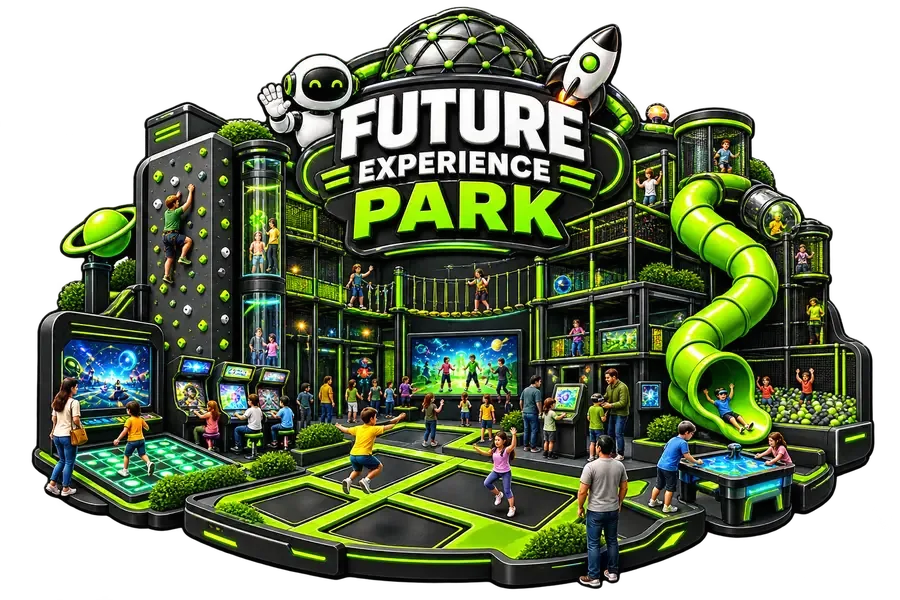
Play is one of the primary ways children explore the world. They move, test ideas, make decisions, repeat actions, communicate with other children, fail, adjust, and try again. These experiences support cognitive, physical, social, and emotional development without turning entertainment into formal education.
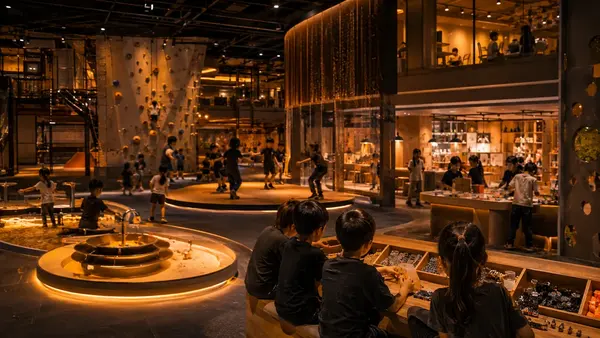
A climbing structure, for example, is not only a physical attraction. A child chooses a route, estimates distance, manages movement, reacts to other children, evaluates risk, and gradually learns what is possible. Building activities introduce balance, structure, cause and effect. Pretend play supports imagination, language, and social understanding. Group games create opportunities for communication, cooperation, negotiation, and self-control.
This has direct implications for activity park operators and developers. Developmental value does not require classrooms or lessons. In many cases, it can be built directly into the entertainment experience through better activity design.
This also matters commercially. A park that provides entertainment only may compete mainly on price, proximity, equipment, and novelty. A venue that parents also perceive as valuable for their children has another reason to earn repeat visits, memberships, school partnerships, and stronger community support.
The objective is not to make every attraction educational. The objective is to understand what children may be practicing, discovering, creating, or learning while they play, and to design the environment accordingly.
Key points
- Play and learning should not be treated as opposites.
- Physical activities can also develop decision-making, confidence, and problem-solving.
- Social play supports communication, cooperation, and negotiation.
- Developmental value can be embedded naturally into entertainment.
- Visible developmental value can strengthen the parent value proposition and repeat visitation.
The developmental foundation for this approach is discussed in How to Build the Best Activity Park.