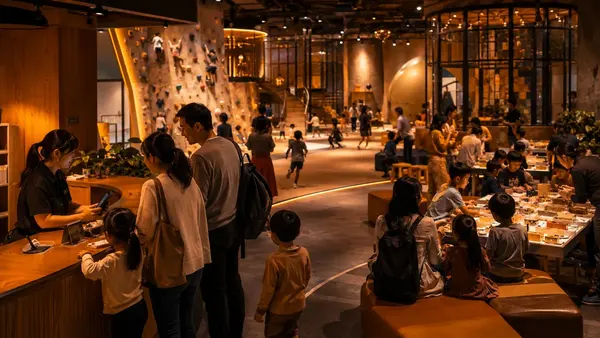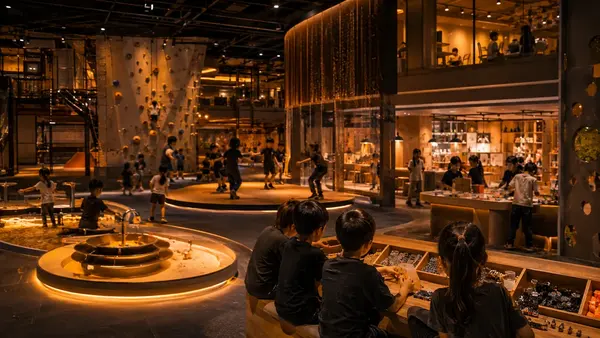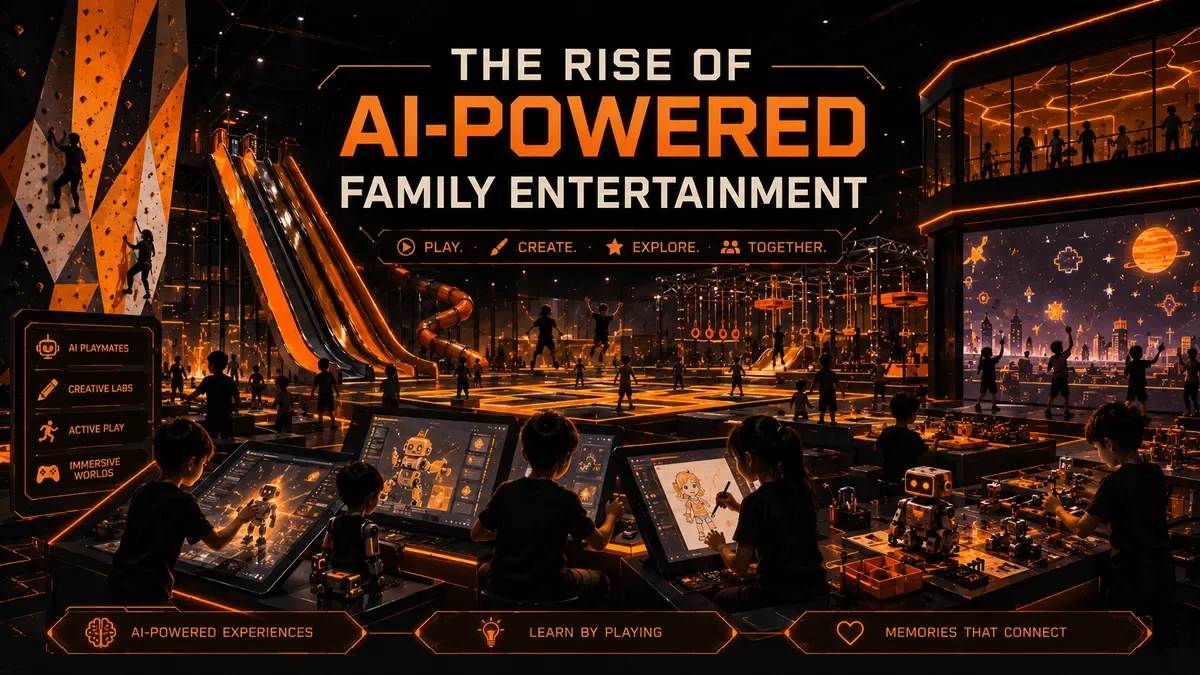
Artificial intelligence can create a new layer of family entertainment, but its value is not in putting another chatbot or screen inside a park. The real opportunity is to use AI to make experiences more creative, personal, adaptive and continuous while keeping children active participants.
AI can support creation across many types of activities. Children can develop stories, characters, games, music, designs, businesses or future-city ideas and use AI as a co-building tool. The important design principle is that the child still makes choices, evaluates results, improves the work and remains the author of the outcome.
AI can also help solve the personalization gap. Two children entering the same park may have different ages, interests, abilities and histories. A persistent profile can help recommend different missions, difficulty levels or creative pathways so that later visits become more relevant than the first.
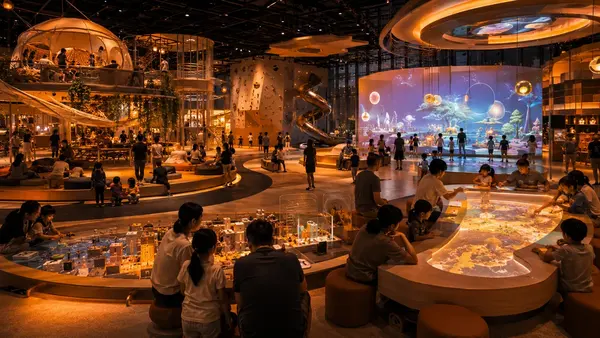
The technology can strengthen exploration as well. Children can investigate space, transportation, climate, food systems, professions, cities or media while asking questions, comparing possibilities and testing ideas. In this role, AI is not the attraction by itself; it becomes part of a larger physical, social and creative experience.
Responsible implementation matters. Age-appropriate guidance, privacy, moderation, verification and clear boundaries should be built into the experience from the beginning. AI-powered family entertainment should help children understand both the possibilities and limitations of the technology rather than presenting generated output as automatically correct.
Where AI can add real value
- Creative tools that help children make visible outcomes.
- Personalized missions, recommendations and difficulty.
- Feedback and continuation across repeat visits.
- Exploration of future topics and professions.
- Responsible AI literacy through hands-on experience.
- Operational content that can change without rebuilding the park.