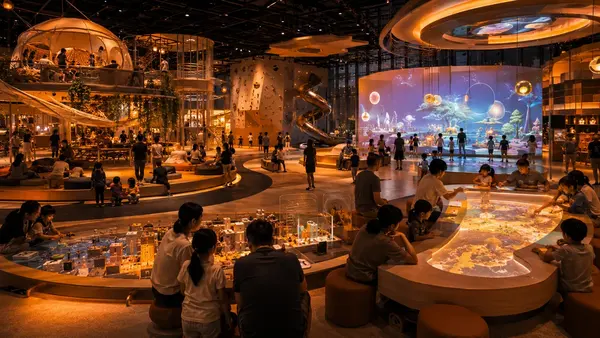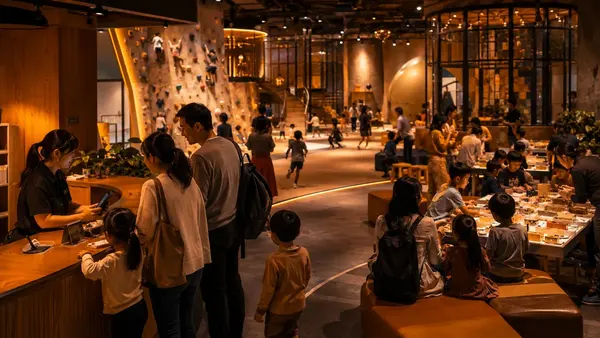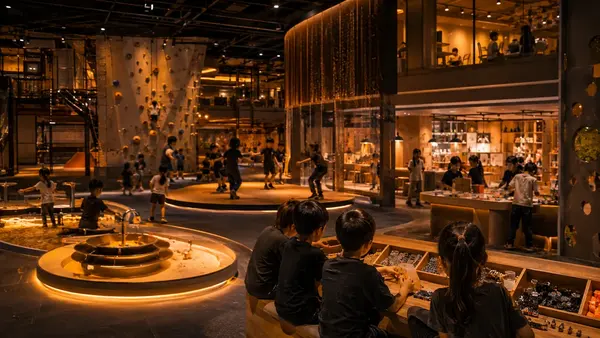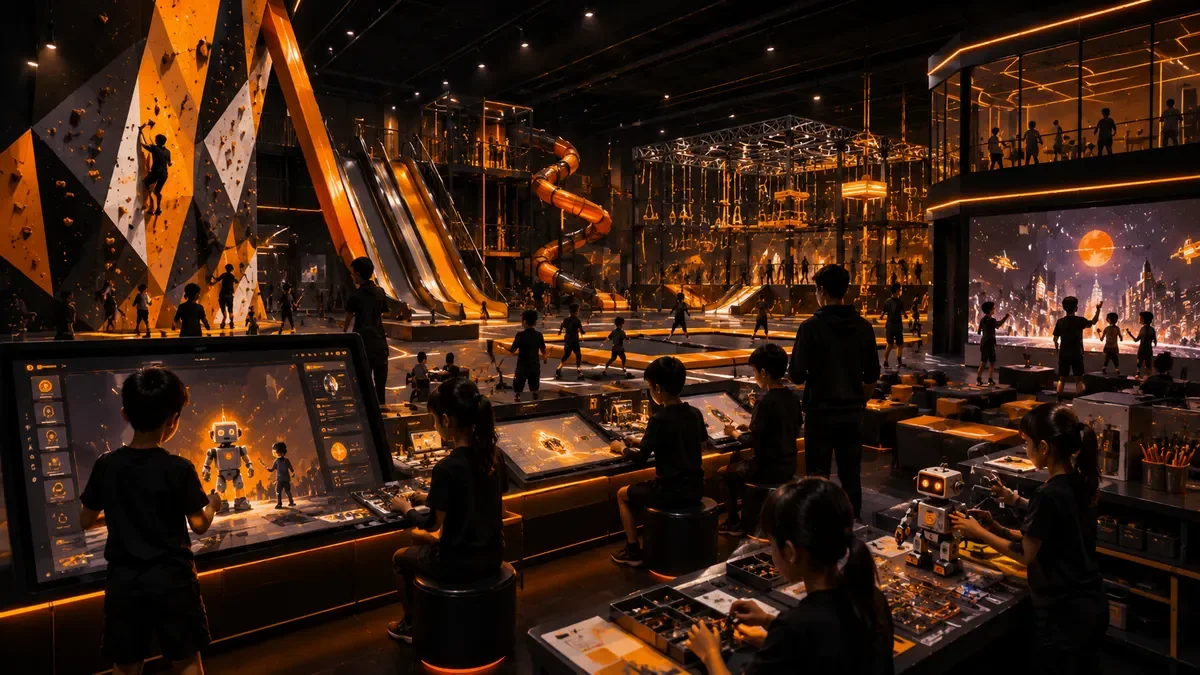
An activity park does not need classrooms to support development. Children learn naturally when they move, experiment, create, negotiate, solve problems and try again. Better family entertainment can preserve the excitement of play while designing more intentionally around these behaviors.
A climbing route can develop more than strength. Children choose paths, judge distance, manage uncertainty and build confidence. A building activity introduces structure and cause-and-effect. A team game requires communication and self-control. A creative station can turn an idea into a book, game, character, design or prototype.
This is different from adding educational labels to ordinary attractions. The objective is to design the activity itself so that thinking, movement, creativity and social interaction are part of the fun. When development is intrinsic to the experience, children remain motivated by play rather than by external instruction.
Digital tools can extend this approach when they increase agency. AI, coding, robotics and media creation can help children make something, test ideas, receive feedback and continue projects over time. The strongest technology experiences should keep the child as the author, designer, builder or decision-maker.
For parents, visible developmental value strengthens the reason to choose one venue over another. Parents may be more willing to approve repeat visits, memberships, camps or birthday programs when they understand that the experience supports physical, cognitive, creative or social development while still being genuinely entertaining.
Design principles
- Keep entertainment first; development should be embedded in the experience.
- Give children choices, challenges and opportunities to create.
- Combine physical, cognitive, creative and social participation.
- Use technology to support agency rather than passive screen time.
- Make progress and outcomes visible enough for families to value them.